How to Stage a Home for a Quick Sale
Editorial Team 12 min read
Last Updated: October 28, 2026
Quick Summary
To stage a home for a quick sale, clean first, clear second, and style last: declutter every room, depersonalize, deep clean, then rearrange furniture and brighten the lighting. Prioritize the living room, kitchen, primary bedroom, and bathrooms, and run a 15-minute reset before every showing so the home stays show-ready.
- Declutter before you paint or decorate, since it costs nothing and changes the most.
- Stage the living room, kitchen, primary bedroom, and bathrooms first because buyers judge them first.
- Build a 15-minute reset routine covering counters, bedding, entry, blinds, and trash before each showing.
- Pull furniture away from walls and open traffic flow to make rooms read larger.
- Consider a professional stager if the home is vacant or has awkward layouts you cannot solve.
Table of Contents
- Why Staging Helps You Sell Faster
- Your Home Staging Checklist for Sellers
- Which Rooms to Stage When Selling a House
- How to Stage a House on a Budget
- Home Staging Before and After Examples
- When to Hire a Professional Stager
- Get a Personalized Staging Plan for Your Home
- Frequently Asked Questions
Why Staging Helps You Sell Faster
Staging works because buyers decide fast, and most of that decision happens online before they ever walk through the door, so knowing how to stage a home matters early. Learning how to stage a home for quick sale starts with one idea: you are not decorating, you are removing reasons for a buyer to say no.
The numbers back this up. According to National Association of Realtors research on staging, 83% of buyers' agents said staging made it easier for shoppers to picture a property as their future home. That mental picture is what turns a saved listing into a showing.
Here is the part most sellers miss. Staging is not about making a home look expensive. It is about making it look easy to live in.
A cluttered room reads as "work to do." A staged room reads as "move in and relax." Buyers pay for the second feeling.
Reported results point the same direction. The Zebra's 2026 home staging statistics reports that 85% of staged homes sold for 5% to 23% over list price. Treat that as a reported pattern, not a promise. Staging alone does not set your sale price, and no honest agent will tell you it does.
What staging does is widen your buyer pool and shorten the gap between listing and offer. That is the goal.
Your Home Staging Checklist for Sellers
A home staging checklist for sellers can follow an order. Clean first, clear second, style last.
Work through these steps:
- Declutter every room. Remove unnecessary items from counters, floors, and closets.
- Depersonalize. Take down family photos and most personal belongings.
- Deep clean. Windows, grout, baseboards, vents, and light fixtures.
- Define each space. Show a clear purpose for every room.
- Rearrange furniture. Open traffic flow and pull pieces away from walls.
- Brighten the lighting. Swap dim bulbs and open every blind.
- Refresh paint where needed. Light, neutral colors throughout.
- Boost curb appeal. Trim, edge, sweep, and clear the entry.
- Do a final show-ready walkthrough. Check every room from the doorway.
Most sellers want to start with paint and decor. Start with decluttering instead. It costs nothing and changes the most.
Watch out: staging around your daily life without a reset routine is the most common failure. Homes drift back to normal within a week, and the listing photos stop matching the house.
Which Rooms to Stage When Selling a House
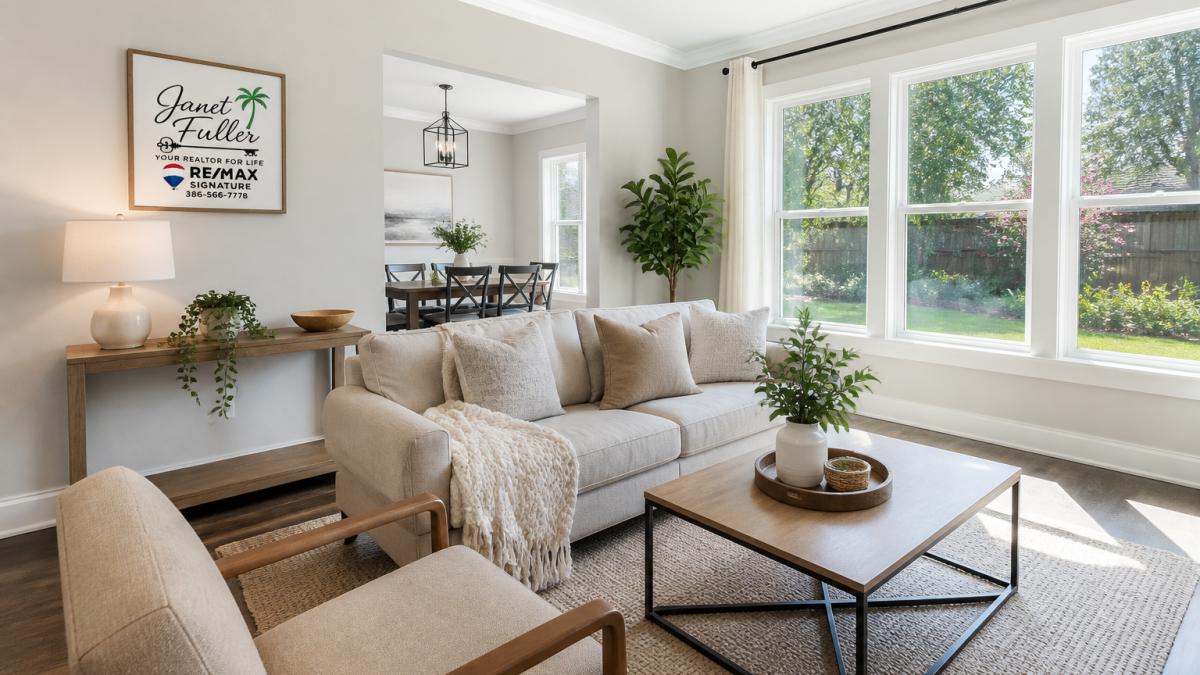
When deciding which rooms to stage when selling a house, prioritize the spaces buyers judge first: the living room, kitchen, primary bedroom, and bathrooms. Those four carry most of the emotional weight. But the difference between a staged home and a home that stays show-ready is a checklist you can run room by room and a reset routine you can repeat before every showing.
Room-by-room staging checklist
- Living room: clear surfaces, one clear seating layout, nothing blocking the walkway, and a single throw or bowl as an accent.
- Kitchen: bare counters except one small item, clean appliances, no dishes anywhere, and clear the sink.
- Primary bedroom: calm and simple, matched bedding, nothing stored under the bed, and clear nightstands.
- Bathrooms: fresh towels, clear counters, no products in sight, and a clean mirror.
- Entry: the first impression, so clear shoes, coats, and clutter, and leave one hook or tray as an accent.
- Secondary bedrooms: a bed and one piece of art, nothing more.
The showing-day reset routine
Staging around daily life without a reset routine is the most common failure. Homes drift back to normal within a week, and the listing photos stop matching the house. Build a 15-minute reset you can run before every showing:
- Clear the counters in the kitchen and bathrooms.
- Fluff the bedding and close closet doors.
- Sweep the entry and tuck away shoes and coats.
- Open the blinds and turn on every light.
- Take out the trash and wipe down visible surfaces.
For households with children or pets, keep a labeled bin for toys and pet gear and clear it before every showing. Buyers should never meet the evidence of a busy household, even when the household is very much alive.
Accessibility and safety staging
A welcoming home is one every buyer can move through comfortably. Clear walkways of cords and clutter, secure rugs so they do not slip, and make sure doorways and hallways stay open. Keep pathways to the entry, main rooms, and bathrooms unobstructed, and avoid decor that blocks light switches or door handles. These steps protect buyers with varied needs and make the home feel easier to live in for everyone. Ensuring that your interior remains bright and accessible is just as vital as how HDR photography benefits the visual presentation of your listing online.
How to Stage a House on a Budget
You can stage a house on a budget without renting a single thing, but the real trick is knowing what to do first. Most sellers waste money on decor before they have cleared the clutter that was suppressing the room's appeal in the first place. The plan below sequences your effort by time and spend so every dollar and every hour lands where it changes buyer perception the most.
The weekend plan (no-cost, highest impact)
If you have two days and no budget, do these in order:
- Declutter every surface and closet. Counters, floors, shelves, and closets. This is free and changes the most.
- Depersonalize. Remove family photos, collections, and most personal items so buyers can picture themselves in the space.
- Deep clean. Windows, grout, baseboards, vents, and light fixtures.
- Open the light. Raise every blind, swap dim bulbs for brighter ones you already own, and clear window treatments that block daylight.
- Reset the entry. Clear shoes, coats, and mail so the first impression is clean.
That weekend alone can produce a visible shift, and it costs nothing but time.
Call me for all your real estate needs! →
The one-week plan (small spend, targeted purchases)
Once the free work is done, consider these items:
- Fresh white bedding and towels. One of the few purchases consistently worth making.
- One green plant per main room. Real or good faux.
- Light neutral paint touch-ups on scuffed walls and trim.
- A single statement piece rented or borrowed if a room feels empty, not a houseful of furniture.
The limited-budget plan (under a tight cap)
If your total staging budget is small, consider the living room, kitchen, primary bedroom, and bathrooms. You could spend on bedding, towels, and lighting there before anything else. A clean, sparse room may look less crowded than one with pieces that do not fit.
Free vs. paid: what to expect
Staging steps can include decluttering, depersonalizing, cleaning, and rearranging furniture you already own. For paid services, consider your home's needs and ask for a written plan that separates "must do" from "nice to have" before you agree to anything. Treat any reported sale-price lift as a pattern, not a promise.
Home Staging Before and After Examples
The clearest home staging before and after examples are rarely dramatic remodels. They are the same room with fewer things in it.
Picture a living room before staging: a recliner angled at the TV, a coffee table buried in mail, dark curtains closed, and a bookshelf packed to the edges. The room feels small and busy.
Now the after: recliner removed, sofa pulled off the wall, table cleared to one bowl, curtains opened, shelf edited to a few objects. Same square footage. It reads as twice the size.
That pattern repeats in every room:
| Room | Before | After | Why It Works |
|---|---|---|---|
| Living room | Furniture against walls | Seating pulled in, clear path | Better traffic flow |
| Kitchen | Appliances and papers out | Bare counters, one accent | Looks maintained |
| Primary bedroom | Mismatched bedding, clutter | Matched linens, clear surfaces | Feels calm |
| Bathroom | Products on counters | Fresh towels only | Reads as clean |
| Entry | Shoes and coats piled | Clear floor, one hook | Strong first impression |
The lesson is consistent. Subtract before you add.
When to Hire a Professional Stager
You may consider a professional stager if the home is vacant, if you are unsure how to arrange the rooms, or if you are selling remotely or during a major life transition. A checklist can help you plan occupied-home staging.
Bring in a pro when:
- The home is empty and needs furniture to photograph well.
- Rooms have awkward layouts you cannot solve.
- You are selling remotely or during a major life transition.
- Your listing photos need to compete at a high price point.
Real Estate Staging Association market data reported a 111% average sale-to-list ratio across 175 homes with recorded list prices in its 2026 highlights. That figure covers staged homes in their sample and does not prove staging caused the result, but it shows why serious sellers ask about staging early.
Before agreeing to staging services, ask whether the stager can provide a written plan that separates "must do" from "nice to have."
Get a Personalized Staging Plan for Your Home
At Janet Fuller PA, we provide real estate services for buyers and sellers in Volusia and Flagler counties.
Ready to discuss your real estate needs? Call Janet Fuller at 386-566-7778 or email info@yourdaytonarealestate.com for personalized real estate assistance.
Frequently Asked Questions
How do you stage a home for a quick sale?
Start by decluttering and depersonalizing every room, then focus on the areas buyers care about most: the living room, kitchen, primary bedroom, and bathrooms. Use neutral colors, improve lighting, and arrange furniture to create clear walkways. According to the National Association of Realtors, 83% of buyers' agents said staging helped buyers envision the home as their future residence. A focused effort on these key spaces can help present your property to prospective buyers.
What should you do first when staging a home?
The first step is to declutter and depersonalize. Remove personal photos, keepsakes, and excess belongings so buyers can picture themselves in the space. This can make rooms feel less cluttered. Once surfaces are clear, deep clean the entire home, then move on to furniture arrangement and lighting adjustments. Tackling these basics before adding any decor gives you a clean, neutral foundation.
Which rooms should you stage when selling a house?
Prioritize the rooms that buyers scrutinize most: the living room, kitchen, primary bedroom, and bathrooms. These spaces are among the areas to consider when planning your staging. If your budget allows, extend staging to the dining area and any additional bedrooms. Focus on creating defined purposes for each room and highlighting architectural features. Small touches might include fresh towels in the bathroom or a bowl of fruit in the kitchen.
Does staging a home help it sell faster?
Staging is one way to present your home to prospective buyers. The Real Estate Staging Association reported an average sale-to-list ratio of 111% across 175 homes with recorded list prices in its Q1 and Q2 2026 highlights, though this does not prove staging alone caused the result. Additionally, 22% of sellers' agents reported a 1% to 5% increase in selling price for staged homes, according to The Zebra's 2026 staging statistics. Staging can be considered as part of preparing a home for listing photos.
