Tips for Out of State Home Buyers: 2026 Guide

Editorial Team 14 min read
Table of Contents
- Start With a Long Distance Home Buying Checklist
- Hiring a Local Realtor for Relocation Beats Going It Alone
- Virtual Home Tours for Buyers: What to Look For
- Closing on a House Remotely: Documents, Escrow, and Timelines
- Tax, Insurance, and Utility Setup for Out of State Home Buyers
- Common Mistakes Out of State Home Buyers Make
- Frequently Asked Questions
Last Updated: September 30, 2026
Start With a Long Distance Home Buying Checklist
Remote house hunting has moved from niche to mainstream. According to Realtor.com's 2026 out-of-market search analysis, 60.1% of online views of real estate listings in spring 2026 were for out-of-market homes, up sharply from 48.2% before the pandemic. This guide walks through the practical steps that separate a smooth out-of-state purchase from an expensive lesson. Tips for out of state home buyers really come down to one idea: front-load the work you can do remotely so the decisions you make in person are simple.
Financial Prep Before You Look at Listings
Pre-approval is a lender's written estimate of what you can borrow, based on verified income, assets, and credit. Get it before you browse a single listing, because sellers in competitive markets won't take an out-of-state offer seriously without it.
- Gather two years of tax returns, recent pay stubs, and bank statements
- Ask whether the lender is licensed in the destination state
- Confirm how the loan treats a primary residence versus a secondary home
- Budget for closing costs, moving expenses, and a possible gap between sale and purchase
Research Tasks You Can Do From Your Couch
School ratings, commute times, and neighborhood demographics are all available remotely, as are property tax records, which vary by county and often reset when a home changes hands.
- Pull the county property appraiser's record for any address you're considering
- Check flood zone maps and recent insurance claim history
- Review local ordinances on short-term rentals if that's part of your plan
- Compare median home price trends over the last three years, not just the current listing price
Hiring a Local Realtor for Relocation Beats Going It Alone
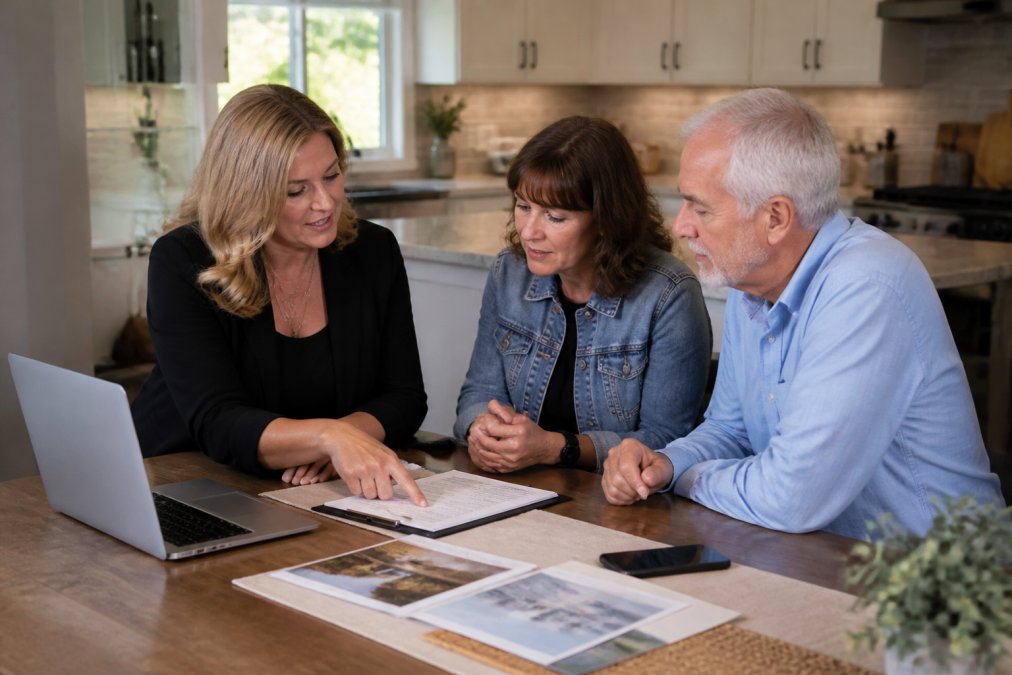
Hiring a local realtor for relocation is the single highest-use decision an out-of-state buyer makes. A local agent knows which streets flood, which builders have warranty complaints, and which listings are priced to sit.
Questions to Ask on Every Video Walkthrough
A virtual tour is a live video call, not a slideshow. Treat it like an inspection preview and direct the camera yourself.
- Ask the agent to open every closet, cabinet, and garage door
- Request a walk of the property line and any shared walls
- Have them run the water, flush toilets, and test the HVAC
- Ask for a phone camera pointed at the electrical panel and water heater
Virtual Home Tours for Buyers: What to Look For
Virtual home tours for buyers work best paired with an independent inspection. Never waive the home inspection because you "saw" the house on video. A licensed inspector catches what a phone camera cannot: roof condition, foundation movement, and hidden moisture.
| Stage | Remote Task | On-Site Task |
|---|---|---|
| Before offer | Video tour, disclosure review | None |
| Under contract | Appraisal, title search | Home inspection |
| Pre-closing | Remote notary, wire funds | Final walkthrough |
Closing on a House Remotely: Documents, Escrow, and Timelines
Closing on a house remotely is routine, but it requires planning. Escrow is a neutral third party that holds funds and documents until both sides meet their obligations. Most remote closings follow a predictable sequence:
- Title search and title insurance issued
- Appraisal completed and reviewed by underwriting
- Closing disclosure delivered at least three business days before signing (TILA-RESPA Integrated Disclosure FAQs)
- Remote online notarization or a mobile notary at your location
- Funds wired to escrow
- Deed recorded with the county
Remote Online Notarization vs. a Mobile Notary
This is the decision most out-of-state buyers don't know they have to make. There are two paths, and they aren't interchangeable:
- Remote online notarization (RON). You sign on camera through a platform the title company approves, and the notary is commissioned in the state where the closing occurs. RON requires identity verification, an audio-video recording, and a platform meeting the destination state's standards. Not every state authorizes RON for real estate documents, and not every lender or title company supports it.
- Mobile notary. A notary travels to you, in your current state, to witness your signature on paper documents. This is more widely accepted but requires scheduling, a travel fee, and shipping the signed package back, which adds days to the timeline.
Digital Closing Platforms and What They Actually Do
Many title companies now run closings through digital platforms that combine e-signature for non-notarized documents with RON for the rest. You may sign some documents days before the official closing date and only the notarized ones on the day itself. Ask which documents can be e-signed and which require a live notary, the answer determines how much of your closing day is on camera.
Wiring Funds Safely
A few habits reduce the risk:
- Confirm wire instructions by phone using a number from the title company's own website, not from an email
- Send a small test wire first if the title company allows it, then confirm receipt before sending the balance
- Ask whether the title company accepts a cashier's check or a same-day transfer as an alternative to a wire
- Keep the confirmation and the call log until the deed is recorded
Plan the notary, the platform, and the wire at least two weeks out. Buyers who close remotely without stress confirmed all three before the closing disclosure arrived.
Tax, Insurance, and Utility Setup for Out of State Home Buyers
Property taxes, insurance, and utilities are the three costs out-of-state buyers most often underestimate. Property tax rates and assessment rules are set at the state and county level, so a rate you paid elsewhere tells you nothing about your new bill. Check the county property appraiser's site for current rates rather than a listing agent's estimate, and confirm whether the destination state caps annual assessment increases or reassesses to market value on sale, that rule can swing your bill by thousands in year one.
Multi-State Tax Consequences Most Guides Skip
Owning property in a state where you don't reside creates filing obligations a local buyer never faces. The two issues that trip people up most:
- Residency and domicile rules. States use tests like days spent there, where you're registered to vote, where your vehicles are titled, and where you earn income. A second home doesn't automatically make you a resident, but a long stay plus a driver's license change often does, and that can pull your entire income into the new state's tax base.
- Sourcing of rental and capital-gains income. If you rent the property, most states tax that income at the source. When you sell, some states withhold a percentage of the proceeds from non-resident sellers at closing and require you to file a return to recover the difference.
- Property tax exemptions. Homestead and primary-residence exemptions usually require you to actually live there. Filing for one on a home you don't occupy is a common and expensive mistake.
Insurance Nuances for Out-of-State Owners
Insurance is the bigger surprise, and where remote buyers get blindsided. Coastal and inland flood risk, roof age, and wind mitigation features all affect premiums, and some carriers won't write a policy on an older roof. Get quotes before you remove your inspection contingency.
- Charge more, or decline outright, for homes left unoccupied for more than 30 to 60 days
- Require a vacancy permit or a landlord policy if the home sits empty between purchase and move-in
- Exclude water damage from a home with no one checking on it, unless you arrange periodic visits
Setting Up Utilities and Infrastructure From Afar
- Transfer or open utility accounts at least two weeks before closing; some providers require a deposit and a signed lease or deed before activation
- Confirm whether water, sewer, and trash are billed by the city or a private provider, in many areas, trash is private and won't transfer automatically
- Ask whether the home has a well and septic system instead of municipal service; those require their own inspections and maintenance contracts
- Schedule internet installation early, since rural and new-construction addresses often have limited provider options and long lead times
- Set up mail forwarding and update your address with the IRS and your bank
Budget for all three categories before you make an offer, not after. Buyers who get surprised treated taxes, insurance, and utilities as afterthoughts.
Common Mistakes Out of State Home Buyers Make
The most expensive mistake is buying sight unseen without an inspection. The second is underestimating carrying costs during a gap between two mortgages.
- Skipping the final walkthrough because you're remote
- Waiving the appraisal contingency in a competitive market
- Forgetting that HOA rules can restrict rentals, pets, and parking
- Assuming your current insurance agent can write a policy in the new state
- Failing to budget for curb appeal and immediate repairs
Frequently Asked Questions
Is it difficult to buy a house out of state?
It is more complex than buying locally, but not impossible. The main challenges are coordinating remote tours, timing your closing around a sale in your current state, and understanding local property taxes and ordinances you have never dealt with before. A local realtor for relocation handles most of the logistics, and virtual home tours let you screen properties before flying in for a final walkthrough.
What are the biggest risks when buying a home without seeing it in person?
The top risks are hidden condition issues, neighborhood mismatch, and underestimating commute time or walkability. A home inspection covers structural problems, but it will not tell you whether the street is loud at night or whether the nearest grocery store is 20 minutes away. Visit in person before your contingency period ends, or ask your realtor to walk the neighborhood on video.
How do I coordinate selling my current home while buying in another state?
Line up your mortgage pre-approval first, then decide whether you will rent briefly in the new market or carry two mortgages. Some buyers use a rent-back agreement so they stay in the old home after closing while the new purchase wraps up. Discuss bridge financing and contingency timelines with your lender early, because most sellers will not accept a contract tied to a home that has not sold.
What specific documents do out-of-state buyers need for a mortgage?
Expect to provide standard income and asset documentation, plus proof of your relocation if you are changing jobs. Lenders may also ask for a letter of explanation for any gap in employment, a copy of your current lease or sale contract, and details on any secondary home or investment property you own. Remote closings require notarized documents, so confirm whether your lender accepts remote online notarization.
How can a local real estate agent help with a long-distance purchase?
A local agent knows which neighborhoods flood, which streets back up at rush hour, and which builders have a reputation for delays. They can attend inspections on your behalf, verify property disclosure statements, and flag local ordinances that affect short-term rentals or multi-family use. Janet Fuller PA works with buyers relocating to Volusia and Flagler counties and can walk you through the process step by step.
What should I look for when researching neighborhoods from another state?
Start with median home price trends, property tax rates, and neighborhood demographics. Then layer in the things data will not show you: walkability, commute time to your job or the nearest hospital, and how the area feels at different times of day. Ask your realtor for a market analysis on the specific streets you are considering, not just the zip code.