What Is Included in Real Estate Commission? 2026 Guide

Editorial Team 13 min read
Table of Contents
- What Is Included in Real Estate Commission
- Real Estate Commission Breakdown: Where the Money Goes
- Who Pays Real Estate Agent Commission
- Real Estate Commission on a $300,000 House
- The Real Estate Agent Commission Agreement
- What Commission Does Not Cover
- How to Negotiate and Structure Your Commission
- Frequently Asked Questions
Last Updated: October 5, 2026
What Is Included in Real Estate Commission
Real estate commission is the percentage-based fee paid to the brokers involved in a property sale, and it covers far more than most sellers expect. According to List With Clever's 2026 commission data, the average total commission sits around 5.46%, below the old 6% standard.
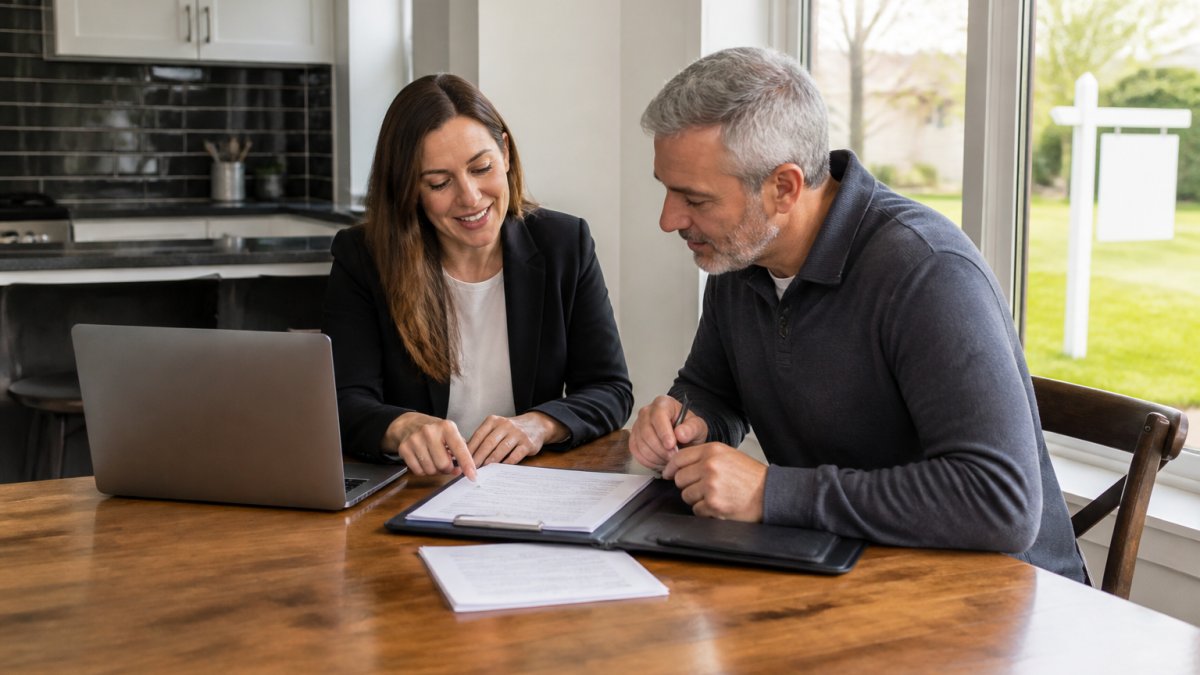
Here is the short answer: commission pays for pricing strategy, marketing, showings, negotiation, and paperwork, all the way to closing. It does not cover title insurance, taxes, or repairs.
Most guides stop there. The more useful answer is an itemized one, because the commission is really a bundle of labor, marketing spend, coordination, and brokerage overhead. Here is what that bundle typically contains.
Pricing and pre-listing labor
- Comparative market analysis and a written pricing recommendation
- Walkthrough and condition assessment, plus a repair or prep punch list
- Recommendations on staging, paint, flooring, and curb appeal
- Pre-listing coordination with photographers, stagers, and inspectors
Marketing and exposure
- Professional photography, and often drone, video, and 3D or virtual tours
- Floor plans and measurement verification
- Copywriting for the listing description
- Syndication to the multiple listing service and major consumer portals
- Print materials, signage, and open house hosting
- Paid digital advertising and social promotion, which some agents fund from commission and others bill separately
Showings and buyer traffic
- Scheduling and confirming private showings
- Hosting open houses, including weekend coverage
- Fielding agent questions and pre-qualifying interest
- Collecting and relaying feedback to the seller
Negotiation and contract work
- Reviewing and presenting offers
- Advising on counteroffers, contingencies, and escalation terms
- Negotiating price, closing date, repairs, and credits
- Drafting and managing amendments and disclosures
Transaction coordination through closing
- Managing inspection timelines and repair negotiations
- Coordinating the appraisal and lender milestones
- Working with title, escrow, and settlement on documents and deadlines
- Tracking contingency dates so nothing lapses
- Attending the closing or coordinating a remote signing
Brokerage overhead baked into the split
- Errors and omissions insurance and general liability coverage
- State licensing, continuing education, and MLS and association dues
- Office support, transaction software, and compliance review
- Broker supervision and legal escalation when a deal gets complicated
Most sellers never see this work itemized. That is exactly why commissions feel confusing. A Consumer Federation of America study of 263 agent and broker websites found that commissions are hidden and poorly understood by consumers.
So let's fix that. Below, we break down where every dollar goes, who actually pays it, and what the fee does not cover.
Real Estate Commission Breakdown: Where the Money Goes
A total commission splits between two brokerages, and then each brokerage splits again with its agent. That chain is called the commission split.
Here is the typical path of one commission dollar:
- Listing brokerage takes its share of the listing-side fee
- Buyer's brokerage takes its share of the buyer-side fee
- Each agent receives an agreed split from their broker
- The broker keeps a portion for overhead, insurance, and support
The national numbers back this up. A 2026 report from Oliver Realty's state-by-state commission report puts the average total at 5.70%, with roughly 2.88% going to the listing side. HomeRise reports 5.44% total, split into 2.77% listing and 2.67% buyer side.
Those figures do not match perfectly. That is normal. Reported averages vary by source and method, and no single number is universal.
| Commission Component | Typical Share | What It Pays For |
|---|---|---|
| Listing side | ~2.7% to 2.9% | Pricing, marketing, showings, negotiation |
| Buyer side | ~2.6% to 2.8% | Property search, tours, offers, inspections |
| Brokerage split | Varies by agreement | Overhead, insurance, office support |
Who Pays Real Estate Agent Commission
The seller pays the commission, and it comes out of the sale proceeds at closing. That is the simple version. The money never leaves the seller's pocket upfront because it is deducted from the final sale price.
Here is how that works in practice:
- The seller signs a listing agreement setting the total commission
- The listing brokerage is paid at closing from the seller's proceeds
- The listing brokerage then pays the buyer's brokerage its share
- Both brokerages split with their agents per their own agreements
This structure explains a common confusion. Buyers often assume their agent works for free. In reality, buyer-agent compensation has traditionally come from the seller's side of the deal, which is why it shows up in the total commission.
The Federal Reserve Bank of Richmond studied this exact structure in a 2024 working paper on real estate commissions and homebuying, focusing on how buyer-agent pay shapes home search.
Real Estate Commission on a $300,000 House
At a 5.5% total commission, a $300,000 home sale costs $16,500, leaving the seller $283,500 before other closing costs. The exact split depends on your agreement, but the math is straightforward.
Here are three worked examples at different rates:
- 5.0% on $300,000 = $15,000 total commission
- 5.5% on $300,000 = $16,500 total commission
- 6.0% on $300,000 = $18,000 total commission
Now split the middle example between both sides:
- Listing side at 2.75% = $8,250
- Buyer side at 2.75% = $8,250
- Seller's net before other costs = $283,500
That $1,500 gap between 5.0% and 5.5% is real money. On a $300,000 sale, every half point of commission equals $1,500.
The Stanford Institute for Economic Policy Research examined broker value in a case study on what real estate brokers add, noting that commissions historically averaged nearly 6% of a home's closing price. That era is fading.
The Real Estate Agent Commission Agreement
The real estate agent commission agreement is the written contract that sets your rate, your term, and what your agent will do. Nothing about commission is binding until that document is signed.
Two agreements matter in most transactions:
- Listing agreement: between the seller and the listing brokerage
- Buyer agreement: between the buyer and the buyer's agent
Both should state the rate clearly. Both should describe services. Both should explain how the fee is earned and when it is due.
What most guides miss is the term length. A listing agreement runs for a set period, often a few months. If your home does not sell in that window, you are not locked in forever. Read the cancellation terms before you sign.
Federal Reserve research has documented how commission patterns play out across a large set of listings. A Federal Reserve research note on broker compensation trends analyzed CoreLogic listing data to trace those patterns.
What Commission Does Not Cover
Commission covers representation and coordination, not the whole cost of selling a home. Plenty of expenses sit outside the fee, and sellers who miss this get blindsided at closing.
Costs that commission does not include:
- Title insurance and title search fees
- Transfer taxes and recording fees
- Prorated property taxes
- Attorney or settlement fees
- Repairs negotiated after inspection
- Staging, if you hire outside the listing services
- Mortgage payoff and any liens
Marketing costs are a gray area. Many listing agents cover photography and listing placement inside their commission. Others charge separately. Get this in writing.
New construction is another exception. Builder compensation works differently, and the builder's sales office often handles the transaction. Ask how agent compensation is handled before you tour a new build.
How to Negotiate and Structure Your Commission
Commission is negotiable, and that has been true for years. The rate is not set by law or by any board. It is a business term between you and your brokerage, and it lives in a written agreement.
Where the terms are documented
Two agreements matter in most transactions:
- Listing agreement: between the seller and the listing brokerage. It states the total compensation, the term length, the services promised, and how the fee is earned.
- Buyer agreement: between the buyer and the buyer's agent. It states what the buyer's agent will be paid and by whom.
Both should state the rate clearly, describe the services, and explain when the fee is due. If a number is not written down, it is not your number.
How buyer-agent compensation is handled
Buyer-agent compensation has traditionally come out of the seller's side of the transaction, which is why it shows up inside the total commission. That practice is not universal, and it is not required.
How to approach the negotiation
- Ask what the rate includes, service by service, and get the list in writing
- Compare the marketing plan against the fee, not just the percentage
- Ask about the term length and the cancellation terms
- Confirm how buyer-agent compensation is handled in your market
- Request a seller's net sheet at your expected price
- Get every term in writing before signing
Structures you can choose from
- Full service: the highest rate, but it covers pricing, marketing, showings, negotiation, and coordination end to end.
- Limited-service or à la carte: you pick specific services, such as MLS entry or photography, and handle the rest. The rate drops, but so does the support.
- Flat fee: a fixed dollar amount instead of a percentage. It can work well on higher-priced homes or when you only need listing exposure.
- Tiered or performance-based: a lower base rate with a bonus if the home sells above a target price. This aligns the agent's incentive with your net.
The trade-off to weigh
A lower rate with thin marketing can cost you more in a lower sale price than you saved on commission. A full-service rate can be overkill on a home that sells itself in a hot market.
That is where local knowledge earns its keep. We build the commission structure around the transaction, not a template.
Frequently Asked Questions
How much does a realtor make off of a $300,000 house?
At a 5.44% total commission, a $300,000 sale generates about $16,320, split roughly $8,310 to the listing side and $8,010 to the buyer side, based on HomeRise's 2026 averages of 2.77% and 2.67%. The agent's personal share is smaller after the brokerage split. Commission is a negotiated percentage of the sale price, not a fixed rate, so the final figure depends on your listing agreement and the terms you agree to at closing.
What services are included in a real estate commission?
A real estate commission typically covers pricing and market analysis, professional photography and marketing, listing syndication, property tours, offer preparation, contract negotiation, transaction coordination, and paperwork through closing. It also funds the cooperating buyer's agent, who brings the buyer and handles their side of the deal. The Consumer Federation of America found in its study of 263 agent and broker websites that these inclusions are often hidden and poorly understood by consumers, so ask for an itemized list before you sign.
Are marketing and photography included in an agent's commission?
In most listing agreements, yes. Photography, listing copy, signage, and online syndication come out of the commission rather than your pocket upfront. Some agents offer staging or drone video as part of the package, while others charge separately. Because the Consumer Federation of America found commissions are poorly understood by consumers, ask your agent to spell out in the listing agreement exactly which marketing costs are covered and which are billed back to you at closing.
Do real estate commissions cover closing costs?
No. Commission and closing costs are separate line items on the settlement statement. Closing costs include title insurance, appraisal, loan origination, recording fees, and prepaid taxes, and they typically run 2% to 5% of the sale price for buyers and a smaller set of seller-side fees. The commission is paid from the seller's proceeds at closing, while closing costs are negotiated separately in the purchase contract and are not part of the commission percentage.
Commission questions get answered best before you sign, not at the closing table. If you are selling in Volusia or Flagler County and want a clear, itemized picture of what your fee covers, Janet Fuller PA can walk you through it. We help buyers and sellers with pricing strategy, marketing, negotiation, and senior and military transitions from first conversation to closing. Get started with Janet Fuller PA and list with a plan you actually understand.