What to Expect When Listing a Home: 2026 Seller Guide
Editorial Team 12 min read
Table of Contents
- The Complete Home Selling Timeline: From Listing Agreement to Closing Day
- How to Price Your Home for Sale Using a Comparative Market Analysis
- Preparing Home for Sale Checklist: What Buyers Notice First
- What to Expect When Listing a Home: Showings, Open Houses, and Offers
- Managing Contingencies, Inspections, and the Appraisal Process
- Net Proceeds, Closing Costs, and Capital Gains: The Money You Actually Keep
- Selling While Living in the Home: Managing the Emotional Toll
- Conclusion: Your Next Step Toward a Successful Sale
- Frequently Asked Questions
Last Updated: September 22, 2026
The Complete Home Selling Timeline: From Listing Agreement to Closing Day
Listing a home in 2026 moves through a predictable sequence, even though the calendar rarely feels predictable while you are living it. Most sellers can expect the full process, from signed listing agreement to closing day, to take somewhere between 30 and 90 days, depending on pricing, condition, and how quickly your buyer's financing clears. This guide walks through what actually happens at each stage, so nothing catches you off guard.
The sequence looks like this:
- Interview agents and sign a listing agreement (1-2 weeks)
- Set your price using a comparative market analysis (a few days)
- Prepare the home: decluttering, repairs, deep cleaning, photography (2-4 weeks)
- Go live and run showings and open houses (1-6 weeks)
- Negotiate offers and enter a purchase agreement (1-2 weeks)
- Clear contingencies: inspection, appraisal, title search (2-4 weeks)
- Final walkthrough, deed transfer, and closing (final week)
The Consumer Financial Protection Bureau's homebuying guide outlines much of the closing side of this process in plain terms, and it is worth reading before you list, not after.
How to Price Your Home for Sale Using a Comparative Market Analysis
A comparative market analysis (CMA) is a report that estimates your home's market value by comparing it to recently sold, currently listed, and expired properties nearby. It is the single most important document in your listing decision, more important than any staging choice.
What separates a useful CMA from a decorative one is the comp set. A real estate professional typically pulls closed sales from the last three to six months within roughly a half-mile to one mile, then narrows to homes within about 10 to 20 percent of your square footage and in the same school attendance area. From there, the agent adjusts each comp up or down for differences: an extra full bath, a finished basement, a garage space, a lot that backs to a preserve versus one that backs to a busy road. Those adjustments are judgment calls, not formulas, which is why two agents can hand you two different CMAs for the same house.
Three comp categories matter, and they tell you different things:
- Closed sales show what buyers actually paid. These carry the most weight.
- Active listings show your current competition. If five similar homes are sitting at your target price, you are not priced to sell; you are priced to wait.
- Expired and withdrawn listings show where the ceiling is. A home that sat for 120 days at $X and then sold at $X minus 6 percent is telling you something specific about that price band.
Pricing strategy depends entirely on your local conditions. In a seller's market, homes often sell at or above asking with multiple offers. In a buyer's market, overpricing by even a small margin can leave a home sitting for months, and the first two weeks on market are when you get your best traffic. A common pattern: the longer a listing sits, the more buyers assume something is wrong with it, and the more the eventual sale price drifts below where a correctly priced listing would have landed on day one.
What most guides miss is that the CMA is a starting point, not a verdict. Your final list price should reflect what buyers in your specific price band are actually paying right now, not what you hope the home is worth. An overpriced listing rarely "catches up" later; it usually just goes stale.
One more mechanism worth understanding before you pick a number: the appraisal. Your buyer's lender will order an independent appraisal, and that appraiser works from closed comps, not from your list price or your agent's CMA. If you price at the top of the range and the appraisal comes in lower, you are back at the negotiating table. Pricing with a realistic cushion above the strongest comps, rather than at a number the comps cannot support, is what keeps the appraisal from becoming a second negotiation.
Preparing Home for Sale Checklist: What Buyers Notice First
A strong preparing home for sale checklist starts with curb appeal, because that is the first thing every buyer sees. Fresh landscaping, a clean driveway, and a well-lit entryway set expectations before anyone steps inside.
- Pressure-wash siding, walkways, and driveway
- Trim shrubs and refresh mulch
- Touch up exterior paint and replace burned-out bulbs
- Declutter every room, including closets and garage
- Deep clean floors, grout, windows, and appliances
- Fix minor repairs: leaky faucets, squeaky doors, chipped tile
- Remove personal photos and excess decor
- Arrange furniture to open up traffic flow
Professional photography comes next. Nearly every buyer's first impression happens online, so listing photos and a clear floor plan matter as much as the open house itself. Homes photographed well get more clicks, more showings, and stronger offers.
What to Expect When Listing a Home: Showings, Open Houses, and Offers
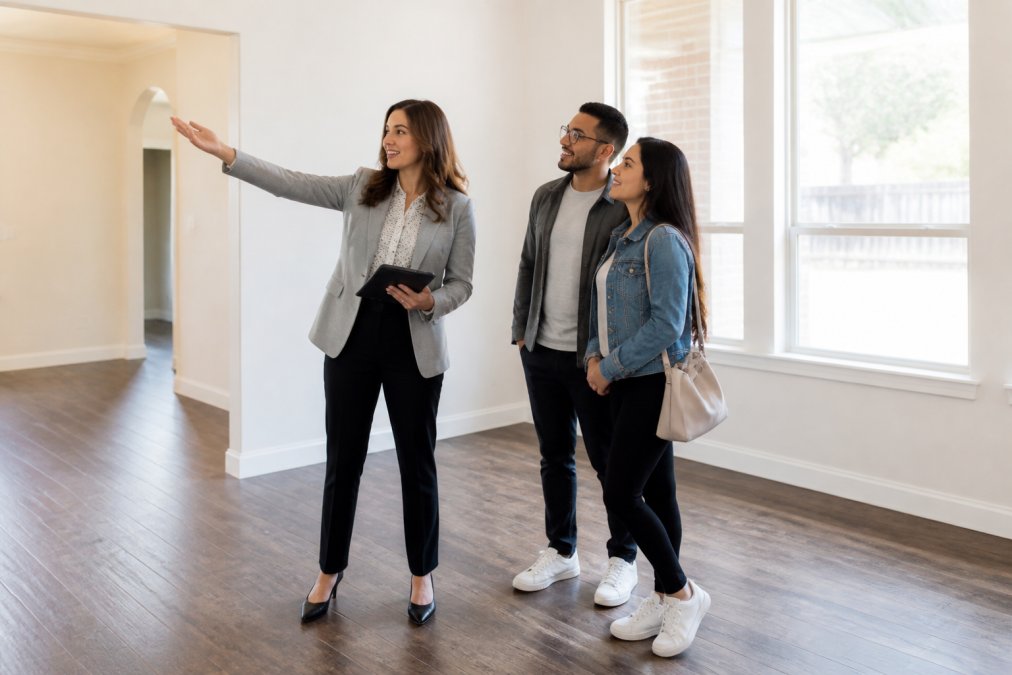
Once your home is live, expect a burst of activity in the first two weeks. That window is when serious buyers and their agents are watching the market most closely.

Showings usually fall into three categories: private appointments, broker previews, and open houses. You will need a system for keeping the home show-ready on short notice, which is one of the harder realities of selling while living in the home.
Managing Contingencies, Inspections, and the Appraisal Process
A contingency is a condition in the purchase agreement that must be met before the sale becomes final. The three you will see most often are the inspection contingency, the appraisal contingency, and the financing contingency. Each one has a deadline written into the contract, and each one gives the buyer a defined exit if the condition is not satisfied.
- Read the contingency deadlines on day one. Put them on your calendar. Missing a deadline can extend the buyer's exit window or void a protection you were counting on.
- Consider a pre-listing inspection. It surfaces problems on your terms, before a buyer finds them, and it lets you decide what to fix versus what to disclose.
- Keep the earnest money in escrow. It sits there until closing, and it is the buyer's skin in the game. How it is handled if the deal falls apart depends entirely on which contingency was triggered and whether the deadlines were met.
- Expect a title search in the background. It confirms you can legally transfer the deed. Liens, old judgments, or an unresolved heirship issue can delay closing, so it is worth ordering early rather than late.
Net Proceeds, Closing Costs, and Capital Gains: The Money You Actually Keep
Your net proceeds are what remains after the mortgage payoff, commission fees, and closing costs are subtracted from the sale price. Sellers commonly pay for title search and insurance, transfer taxes, prorated property taxes, and their share of closing costs.
Selling While Living in the Home: Managing the Emotional Toll
Selling the house you live in is genuinely harder than selling an empty one. You are keeping it show-ready, packing in stages, and saying goodbye to a place full of memories, all at once.
- Set a "show-ready" routine so tidying takes minutes, not hours
- Keep a box for daily essentials that never gets packed
- Plan small transitions out of the house during showings
- Give yourself permission to feel the loss, not just the logistics
Conclusion: Your Next Step Toward a Successful Sale
Selling a home is part logistics, part pricing science, and part endurance test, and the sellers who do best are the ones who plan for all three. If you are preparing to list in Volusia or Flagler County, Janet Fuller PA can guide you through pricing, preparation, showings, and closing with a plan built around your timeline. We work with sellers, buyers, seniors downsizing, and military families relocating to the area, and we treat every listing as a transition, not just a transaction. Get started with Janet Fuller PA.
Frequently Asked Questions
How long does it typically take to sell a home after listing?
In a balanced market, most homes sell within 30 to 60 days, though this varies by price range, condition, and local demand. The home selling timeline includes preparation, active listing, negotiation, and the closing period, which usually adds another 30 to 45 days. If your home sits longer than 60 days without offers, a price adjustment or refreshed marketing strategy may be needed.
What are the most common mistakes to avoid when listing a home?
Overpricing tops the list, since buyers and agents compare your home to similar properties and skip overpriced listings. Other frequent mistakes include skipping a pre-listing inspection, using poor-quality photos, refusing to declutter, and being inflexible with showing schedules. Each of these delays a sale and weakens your negotiation strategy when offers finally arrive.
What should I expect to pay in closing costs and commission fees?
Sellers typically cover commission fees, title search, deed transfer costs, and prorated property taxes. Total closing costs for sellers often range from 6% to 10% of the sale price, depending on your listing agreement and location. Reviewing your closing disclosure before closing day helps you confirm net proceeds and avoid surprises at the settlement table.
How should I prepare my home for showings and open houses?
Start with decluttering and deep cleaning, then focus on curb appeal and home staging. Store personal items, keep counters clear, and make sure the home smells fresh. For open houses, secure valuables and step away so buyers feel comfortable exploring. A showing schedule that accommodates buyer availability, including evenings and weekends, leads to faster offers.